

Window Blinds Inside vs Outside Mount: How to Choose
August 21, 2026 · Updated September 13, 2026 · Guides · By David Martineau
Inside mount or outside mount is the first decision on every blind and shade order. It is also the one most often gotten wrong. This guide explains what each mount does, how much depth each product needs, when the light gap matters, and how we decide, window by window, from Miami to Palm Beach.
Window blinds inside vs outside mount: the difference in one minute
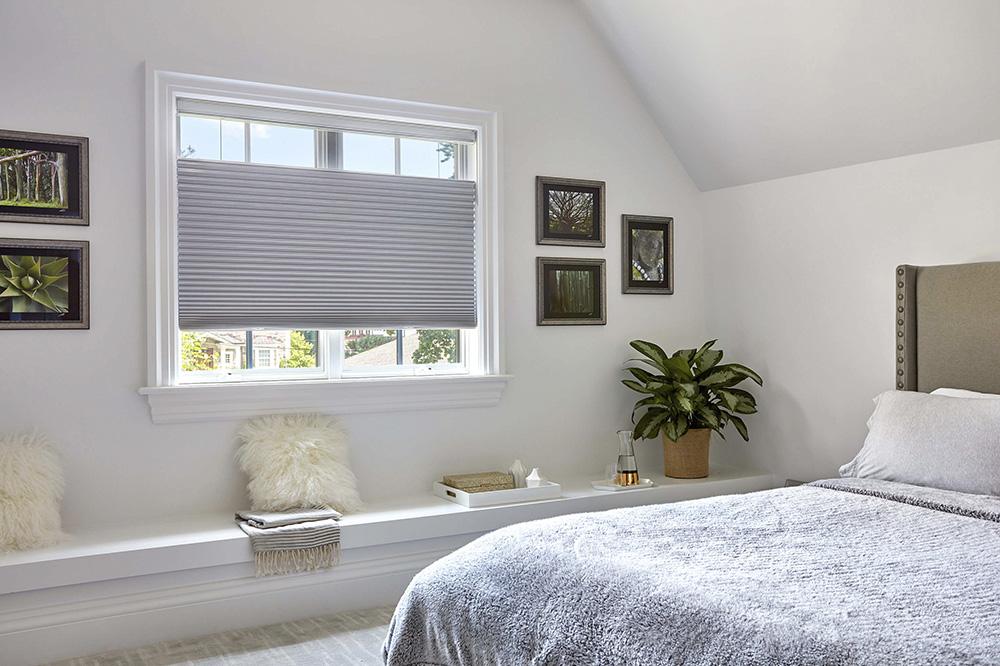
An inside mount sets the blind or shade inside the window frame. The fabric sits within the opening, flush with the wall, and the trim stays visible.
An outside mount fixes the brackets to the wall or the ceiling above the opening. The shade hangs in front of the frame and overlaps it on every side.
Every product we make can be built either way: roller shades, solar shades, zebra shades, Roman shades, honeycomb shades, and wood or aluminum blinds. The product does not decide the mount. The window does.
When inside mount wins
Inside mount is the cleaner, more architectural look. It is our default when the frame allows it.
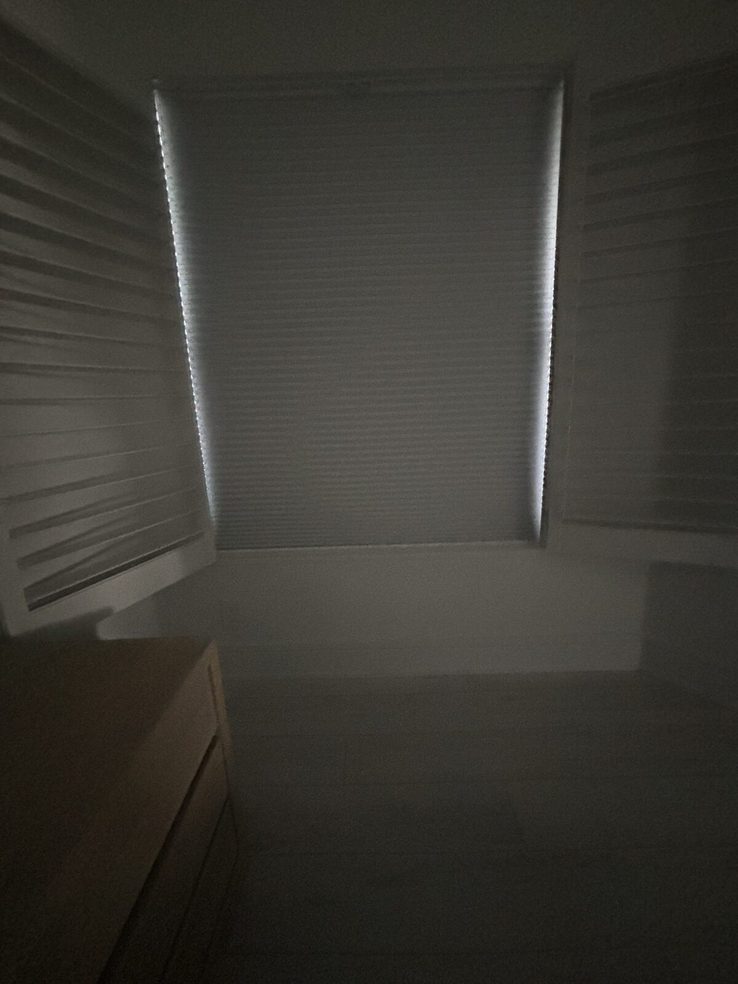
It needs two things. First, enough depth for the shade to sit inside the opening without touching the glass, a crank handle or a tile lip. Second, a frame that is reasonably square. If the opening is out of square by more than about a quarter inch, an inside mount shows a wedge of light on one side.
Inside mount is the right call for:
- Deep frames with trim worth showing. Casings, plantation-style reveals and stone sills all look better uncovered.
- Kitchens, bathrooms and offices where a crisp, tailored reveal matters more than total darkness.
- Windows with a working sill. Plants, a bench seat, a counter behind the sink: an inside mount keeps the sill free.
- Layered treatments. With draperies in front, an inside-mounted shade tucks away and adds no bulk to the wall.
When outside mount wins
Outside mount is the answer when any one of these is true:
- The frame is too shallow for the product you want.
- The opening is out of square.
- A crank, lock, handle, alarm sensor or tile lip is in the way.
- You want the most light blockage possible.
- You want the window to read taller or wider than it is.
- The trim is plain, damaged or simply better covered.
An outside mount roller shade overlaps the opening by a few inches on each side and above. That overlap closes most of the light gap an inside mount always leaves. It is why bedrooms and media rooms usually go outside mount, even when the depth for an inside mount exists.
The light gap: what every inside mount leaves
A shade cannot touch the sides of the frame. If it did, it would rub and eventually jam. So every inside-mounted shade is made a little narrower than the opening. The factory takes about a quarter to half an inch off the total width. That leaves a thin strip of daylight on each side.
In a living room nobody notices it. In a bedroom at six in the morning, everyone does.
There are three ways to deal with it:
- Accept it. Fine for light-filtering fabrics and daytime rooms.
- Go outside mount. The overlap hides the edges of the opening, and the halo drops to almost nothing.
- Add blackout side channels. Slim tracks fixed to the frame, with the fabric running inside them. This is the closest thing to true blackout that exists, and it works with an inside or an outside mount. We price side channels per opening, so ask at the measure. See blackout shades for the fabrics that pair with them.
Blinds behave the same way. Slats and the headrail need clearance, so wood and faux-wood blinds show a line of light at each end when mounted inside the frame.
How much depth each product needs
The number that decides most inside-vs-outside calls is mounting depth: the flat distance from the front of the frame back to the glass, or to the first obstruction. The figures below are typical. The exact requirement depends on the system, the size of the fabric roll and the motor, and we confirm it at the measure.
| Product | Flush inside mount | Minimum to fit inside |
|---|---|---|
| Roller and solar shades, manual Below flush depth the fabric roll sits proud of the frame | About 2.5 to 3 in | About 1.5 in |
| Motorized roller shades (Lutron, Somfy) Larger tube and motor; tall windows carry a bigger roll | About 3 to 4 in | About 2 in |
| Zebra shades Two fabric layers on one roll | About 3 in | About 2 in |
| Roman shades Folds stack at the top; check clearance to the glass | About 2 to 2.5 in | About 1.5 in |
| Honeycomb shades The shallowest product we make for tight frames | About 1.5 to 2 in | About 1 in |
| 2 in wood and faux-wood blinds Slats tilt beyond the headrail, so shallow frames show them | About 3 in | About 1.5 in |
If the depth is a little short, you still have a choice. A shallow inside mount works, with part of the roll or headrail sitting in front of the frame. Some owners never notice; others dislike it on sight. We tell you which you will get before we build anything. When the depth is well short, outside mount is the honest answer.
Floor-to-ceiling glass: when there is no frame at all
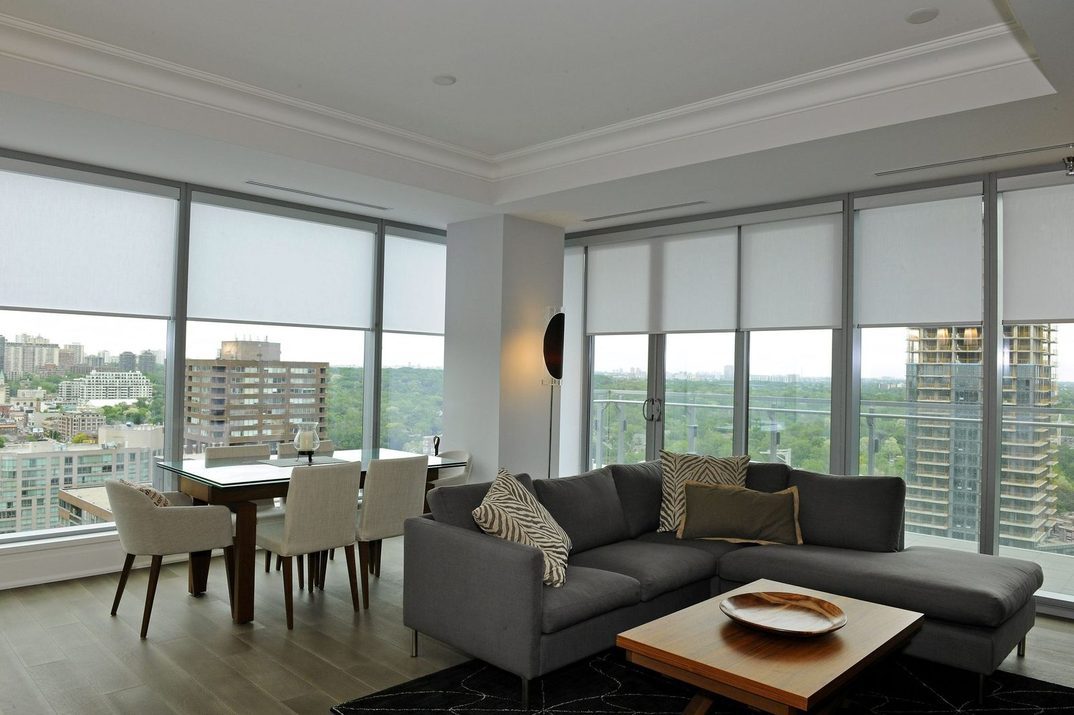
Miami and Fort Lauderdale towers change the question. Floor-to-ceiling glass has no frame, so "inside vs outside" becomes ceiling pocket vs surface-mounted fascia. A recessed pocket hides the roller completely; a fascia or cassette mounted to the ceiling covers it with a clean metal or fabric-wrapped profile.
Concrete slabs and hurricane-impact frames also limit where screws can go. That is one more reason we measure every opening ourselves rather than mailing you a bracket. Condo associations often require a uniform street view, and an outside-mounted fascia in a neutral color handles that neatly.
Sliding glass doors follow the same logic. The shade has to clear the handle and the door track, so it mounts to the wall or ceiling above the opening, wide enough to cover the fixed panel and the slider together.
How we measure for each mount
Inside mount. We take three widths, at the top, the middle and the bottom, and three heights. The shade is built from the narrowest width, and the factory takes its own clearance deduction off that number. Nobody should deduct anything by hand. Depth is measured to the first obstruction, not to the glass.
Outside mount. We measure the opening or the trim we want to cover, then add overlap. For most windows that is 2 to 3 inches on each side and 2 to 3 inches above, more when blackout is the goal. We also check that the shade will clear handles, sills and any wall sconce or thermostat nearby.
Measured wrong, either mount fails. Our own team measures, specifies and installs every shade, so the mount decision is made for you, window by window, at the consultation. The full method, with the depth each motor system needs and the drapery rules, is in the measuring guide.
Cordless lift vs motorized lift
The second decision on every order is how the shade moves. Cordless lift is a spring system you nudge by hand. It is clean, child-safe and right for reachable windows you use now and then.
Motorized lift wins everywhere else: wide spans, high glass, shades you move twice a day, and any window behind a sofa or a counter. On big South Florida glass we motorize by default. See motorized shades for how battery and wired systems compare.
The mount affects this choice a little. Motorized rollers have larger tubes, so an inside mount needs more depth. An outside mount removes that constraint entirely.
Does the mount change the price?
Slightly. An outside mount shade is larger than the opening it covers, so it uses a little more fabric. On a typical residential window the difference is small. Blackout side channels are the real add-on, and they are priced per opening. Our pricing guide lists the numbers before you call.
Quick decision guide
- Deep, square frame and trim worth showing: inside mount
- Shallow frame, out-of-square opening or a handle in the way: outside mount
- Bedroom, nursery or media room: outside mount, or inside mount with side channels
- Floor-to-ceiling condo glass: ceiling pocket or fascia (we spec it)
- Sliding glass door: outside mount, wide enough for both panels
- Reachable, rarely moved window: cordless lift; everything else: motorized
Frequently asked questions
Can I mix inside and outside mounts in one home?
Yes, and most homes do. Keep the mount consistent within a room, then vary it by room: outside mount in the bedrooms, inside mount in the kitchen and the office.
Do outside mount shades look bulky?
Not when they are specified well. A fascia or a cassette hides the roll, the fabric is cut to overlap the trim by the same amount on each side, and the shade reads as a clean panel on the wall.
Can I inside-mount on hurricane-impact windows?
Sometimes. Impact windows often have a shallow reveal and an aluminum frame that is not the right place for a screw, so many of them go outside mount on the wall above. We decide at the measure, opening by opening.
Which mount is better for blackout?
Outside mount, with a few inches of overlap. For a room that needs to be truly dark, add side channels and a blackout fabric.
Do I need to decide before the consultation?
No. Tell us what matters most in each room, light control or a clean reveal, and we bring the depth gauge. The mount is our recommendation to make, and yours to approve.
Time to dress your windows?
One free hour with our team routinely saves owners thousands in avoidable mistakes - wrong fabrics, bad mounts, missed motorization. Book a private, complimentary consultation - we bring the fabrics, the swatches, and honest answers. Start with the free guide: the 5 costly mistakes.